
0 item(s)
View cart
You have no items in your shopping cart.
That nearly black, smoky, full-bodied cup might taste like it could power a small engine. So, does dark roast have caffeine? Absolutely. Dark roast coffee is not caffeine-free, weak, or somehow burned past its ability to get you moving. The real answer is more interesting: roast level matters a little, but bean density, how you measure, and how you brew matter far more.
If you want a bold cup without corporate-coffee guesswork, stop judging caffeine by color alone. Dark roast has plenty of fight left in it.
All regular coffee beans contain caffeine before they ever hit a roaster. The caffeine is naturally present in the seed of the coffee cherry, and roasting does not erase it. Heat changes the bean's color, structure, aroma, and flavor dramatically, but caffeine is relatively stable through the roasting process.
The common claim that dark roast has far less caffeine than light roast comes from a detail that gets lost in translation: dark-roasted beans expand and lose moisture. That makes each bean less dense. A dark roast bean is physically lighter than a light roast bean from the same coffee.
Measure coffee by the scoop, and a scoop of dark roast usually contains fewer beans than a scoop of light roast. Fewer beans can mean slightly less caffeine in the finished cup. Measure coffee by weight, however, and the gap becomes very small. You are using roughly the same amount of coffee material, even if the dark roast takes up more room in the grinder or filter basket.
That is why the honest answer is not "dark roast has more" or "light roast has more." It depends on whether you measure by volume or by weight. For a consistent brew and a clear caffeine target, use a scale. It is the move of someone who wants their coffee to perform, not merely look good on the counter.
Dark roast has a reputation for being the strongest coffee in the room. That reputation is earned by flavor, not necessarily by caffeine. During a longer roast, sugars caramelize, oils become more visible, and the bean develops deeper notes that can read as bittersweet chocolate, toasted nuts, spice, smoke, or a classic roasty finish.
Those flavors hit with authority. Your palate interprets that intensity as strength, which is fair. But flavor intensity and stimulant intensity are not the same mission.
A bright light roast can carry more fruit, floral character, and acidity while delivering similar caffeine. A dark French or Italian-style roast can bring a heavier body and lower perceived acidity while delivering a comparable kick. One is not automatically tougher than the other. They are built for different kinds of coffee drinkers.
If you reach for dark roast because you want a cup that stands up to cream, sugar, ice, or a rushed morning, you are making a flavor decision first. Caffeine is still on board. It just is not the only thing commanding attention.
Roast level is only one variable, and usually not the biggest one. The type of bean matters. Arabica coffees generally contain less caffeine than robusta coffees, although Arabica is prized for its range of nuanced flavor. Blends that include robusta may deliver more caffeine, but that does not automatically make them better coffee.
Serving size matters even more. A small, concentrated espresso can have less total caffeine than a large mug of drip coffee, despite tasting much more powerful. A 12-ounce dark roast drip coffee will usually deliver more total caffeine than a single one-ounce espresso simply because there is more brewed coffee in the cup.
Brew method also changes extraction. A longer contact time, a finer grind, hotter water within a proper brewing range, and a larger coffee dose can all increase how much caffeine ends up in your mug. Cold brew often feels smooth because it tends to be lower in perceived acidity, but it can be very caffeinated when brewed as a concentrate or served in a large glass.
Then there is dose. If you use 24 grams of coffee instead of 16 grams for the same amount of water, you have not found a mysterious high-caffeine roast. You have simply loaded more coffee into the operation. That may be exactly what you want, but call it what it is.
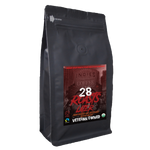
Start with your actual goal. If you want a rich daily driver with dependable caffeine, choose a fresh dark roast and brew it consistently by weight. A practical starting point for drip coffee is around 1 gram of coffee for every 16 grams of water. From there, adjust your dose upward for more body and caffeine, or downward for a lighter cup.
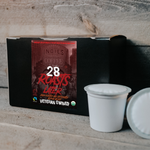
If convenience is the priority, dark roast K-Cups can make a solid, fast cup. Keep expectations realistic: pod brewing typically uses less coffee than a full pour-over or a generously dosed drip brewer. Choose a smaller brew setting when your machine allows it for a fuller, less diluted result.
For cold coffee drinkers, dark roast cold brew can be a smooth, low-acid route to a serious morning cup. Check whether your brew is ready-to-drink or a concentrate. A concentrate is designed to be diluted, and how much you dilute it determines the caffeine per glass.
If maximum caffeine is the mission, do not assume the darkest bag on the shelf is the answer. Look for coffee specifically positioned as highly caffeinated, and pay attention to the suggested serving size. A deliberately high-caffeine blend may use a different bean composition or a heavier dose strategy than a standard dark roast.
Freshness belongs in this decision, too. Freshly roasted coffee does not magically contain more caffeine, but it gives you a better shot at the flavor the bean was meant to carry. Stale coffee can taste flat, woody, or harsh, tempting you to overcorrect with extra grounds, extra sweetener, or another cup. Fresh beans make the dark roast experience cleaner and more deliberate.
The first myth is that dark roast is caffeine-free. Not even close. Decaf is decaf. Dark roast is regular coffee unless the bag clearly says otherwise.
The second myth is that darker always means stronger. Dark roast is stronger in roasted flavor, but its caffeine can be similar to a lighter roast when both are measured by weight. If someone tells you the blackest bean always has the biggest kick, they are skipping the important part.
The third myth is that oily beans mean high caffeine. Surface oil is mostly a sign of roast development and storage conditions. It tells you more about roast style than stimulant content.
The fourth is that bitter coffee must be more caffeinated. Bitterness can come from roast level, brewing temperature, grind size, over-extraction, or the coffee itself. Caffeine has a bitter taste, but bitterness in a cup is not a reliable caffeine meter.
Dark roast earns its loyal following because it is unapologetically bold. It brings weight, depth, and a finish that does not disappear under milk or ice. For many drinkers, that is exactly the point. You do not have to abandon it for a light roast just because someone repeated a half-true caffeine fact online.
At Indies Coffee, the better move is to choose the roast for the flavor you want, then control caffeine through coffee dose, brew method, and serving size. Want a big, no-nonsense morning mug? Brew your dark roast by weight, keep the ratio consistent, and give fresh beans the respect they earned. Your taste buds get the boldness. Your routine gets the caffeine. Nobody has to surrender either.