0 item(s)
View cart
You have no items in your shopping cart.
Most coffee drinkers have heard the same line at least once: dark roast is stronger, so it must have more caffeine. Sounds right. Tastes bold. Still wrong - at least most of the time. If you’re asking what roast has more caffeine, the real answer is less dramatic than coffee myths make it sound.
Roast level changes flavor far more than it changes caffeine. Light roast usually keeps a little more caffeine bean for bean, but the gap is small. Once you brew it in the real world, the bigger factors are how you measure, how fine you grind, what bean you started with, and how much coffee you actually use.
If you measure coffee by the bean, light roast has slightly more caffeine than dark roast. During roasting, beans lose water and expand. Darker roasts get lighter in mass and bigger in size, which changes how they compare in the scoop versus on the scale.
That’s the part that trips people up. A dark roast looks bolder, smells heavier, and tastes more intense. None of that automatically means more caffeine. Roast develops oils, caramelization, smoke, and body. It does not create extra caffeine out of thin air.
When people say dark roast hits harder, they’re usually talking about flavor. Dark roast can taste stronger because it’s roast-forward, lower in acidity, and more bitter around the edges. That flavor punch gets mistaken for caffeine strength all the time.
This is where coffee stops being a bar argument and starts being chemistry.
If you use a scale, light roast tends to have a slight edge in caffeine. That’s because darker roasting burns off a bit more mass. The caffeine difference is not massive, but gram for gram, light roast usually comes out ahead.
For anyone brewing at home with decent consistency, this is the cleanest comparison. If you weigh 20 grams of light roast and 20 grams of dark roast, the light roast often contains a touch more caffeine.
If you use scoops, things get messier. Dark roast beans expand more during roasting, so they take up more space. That means a scoop of dark roast may contain fewer beans than a scoop of light roast. Fewer beans can mean a little less caffeine.
That’s why two people can drink coffee from different roasts and walk away with totally different beliefs about what roast has more caffeine. One person measures with a scoop, another with a scale, and now both are convinced they’re right.
Once the coffee hits water, brew ratio matters more than roast level. A large mug of dark roast made with extra grounds may have more caffeine than a small cup of light roast made weak. Brewing method matters too. Espresso, drip, French press, cold brew, and single-serve formats all extract caffeine differently.
So if your real question is not technical but practical - which cup gives me more kick - the answer is often: the one made with more coffee.
This is the myth engine. Dark roast has a louder flavor profile. It pushes smoky, bittersweet, chocolatey, and sometimes charred notes to the front. That can read as power. For a lot of drinkers, power equals caffeine.
But caffeine itself is basically bitter, not bold in the way roast flavor is bold. What you’re tasting in a dark roast is development, not necessarily stimulation. A lighter roast can carry more brightness, more origin character, and a bit more caffeine while tasting less heavy.
That difference matters if you want the flavor the bean intended instead of roast smoke covering everything up. Lighter and medium roasts often show more of the bean’s natural character. Dark roasts lead with roast influence. Neither is wrong. They just answer different cravings.
Light roast is usually the move if you want the highest caffeine potential from the roast itself, especially when measuring by weight. It also tends to bring sharper acidity, more floral or fruit notes, and more origin detail.
Medium roast lands in the middle and wins a lot of people over because it balances sweetness, body, and brightness without pushing too hard in any one direction. Caffeine is still in the same general neighborhood. For daily drinking, this is where a lot of coffee lovers find their sweet spot.
Dark roast brings heavier roast character, lower perceived acidity, and a more traditional bold-cup profile. It may have slightly less caffeine than light roast under controlled comparison, but not by enough to matter for most casual drinkers. If you love that deep, punchy taste, drink it for flavor, not because you think it is automatically the caffeine champion.
If caffeine is your mission, roast color is not the top variable. Bean type matters more. Arabica usually has less caffeine than robusta. A blend with robusta can hit harder regardless of roast level.
Dose matters even more. If you brew with more grounds, you extract more caffeine. Grind size, contact time, and brew method all shape the final number. Cold brew can taste smoother than hot coffee, but because it often uses a lot of coffee concentrate, it can deliver a serious caffeine load.
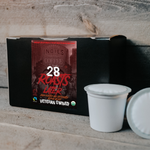
Single-serve formats can vary wildly too. One pod is not equal to another. Some are built for convenience, others for strength. The label matters more than the roast name alone.
Same rule, different packaging. A light roast K-Cup is not automatically going to blow past a dark roast K-Cup in caffeine. The amount of coffee inside the pod and the blend composition matter more. If one pod simply contains more coffee or a higher-caffeine blend, that one wins.
Cold brew follows the same logic. People assume dark roast equals stronger cold brew because it tastes heavier. Not necessarily. If the recipe uses a higher coffee-to-water ratio, longer steeping time, or higher-caffeine beans, a medium or light roast cold brew can absolutely come out stronger.
If you shop by format, pay attention to whether the coffee is marketed as highly caffeinated rather than assuming the roast tells the whole story. That is the smarter path.
If your goal is maximum caffeine with the least guesswork, a light roast measured by weight has a slight edge. If your goal is a bold-tasting cup, dark roast gives you that deep profile, even if the caffeine is not significantly higher. If you want balance, medium roast keeps things squarely in the fight without leaning too bright or too smoky.
There’s also the question of drinkability. The highest theoretical caffeine does not help much if you do not enjoy the cup enough to finish it. Plenty of people do better with a roast they actually want every morning instead of chasing lab-level differences they will never notice.
That’s the independent answer, not the corporate shelf-talk version. Choose roast for flavor. Choose bean type, brew method, and dose for caffeine.
Start with how you drink coffee, not with internet myths. If you brew on a scale and want every bit of caffeine you can squeeze out without moving into specialty high-caffeine products, light roast is a smart pick. If you use scoops and love rich, smoky flavor, dark roast is still a solid choice, just not because it magically carries more caffeine.
If you want a straight path without overthinking it, look for coffees specifically labeled as high caffeine and then choose the roast profile you actually enjoy. That’s a better strategy than treating roast color like a secret code.
At Indies Coffee, that’s the whole point - fresh coffee with a clear lane, whether you want smooth, bold, or built-for-action. The bag should match your taste and your mission, not a half-true myth passed around for years.
Coffee gets better when you stop treating bold flavor and high caffeine like the same thing. Pick the roast that fits your palate, brew it with intention, and let your cup work as hard as you do.
Most coffee drinkers have heard the same line at least once: dark roast is stronger, so it must have more caffeine. Sounds right. Tastes bold. Still wrong - at least most of the time. If you’re asking what roast has more caffeine, the real answer is less dramatic than coffee myths make it sound.
Roast level changes flavor far more than it changes caffeine. Light roast usually keeps a little more caffeine bean for bean, but the gap is small. Once you brew it in the real world, the bigger factors are how you measure, how fine you grind, what bean you started with, and how much coffee you actually use.
If you measure coffee by the bean, light roast has slightly more caffeine than dark roast. During roasting, beans lose water and expand. Darker roasts get lighter in mass and bigger in size, which changes how they compare in the scoop versus on the scale.
That’s the part that trips people up. A dark roast looks bolder, smells heavier, and tastes more intense. None of that automatically means more caffeine. Roast develops oils, caramelization, smoke, and body. It does not create extra caffeine out of thin air.
When people say dark roast hits harder, they’re usually talking about flavor. Dark roast can taste stronger because it’s roast-forward, lower in acidity, and more bitter around the edges. That flavor punch gets mistaken for caffeine strength all the time.
This is where coffee stops being a bar argument and starts being chemistry.
If you use a scale, light roast tends to have a slight edge in caffeine. That’s because darker roasting burns off a bit more mass. The caffeine difference is not massive, but gram for gram, light roast usually comes out ahead.
For anyone brewing at home with decent consistency, this is the cleanest comparison. If you weigh 20 grams of light roast and 20 grams of dark roast, the light roast often contains a touch more caffeine.
If you use scoops, things get messier. Dark roast beans expand more during roasting, so they take up more space. That means a scoop of dark roast may contain fewer beans than a scoop of light roast. Fewer beans can mean a little less caffeine.
That’s why two people can drink coffee from different roasts and walk away with totally different beliefs about what roast has more caffeine. One person measures with a scoop, another with a scale, and now both are convinced they’re right.
Once the coffee hits water, brew ratio matters more than roast level. A large mug of dark roast made with extra grounds may have more caffeine than a small cup of light roast made weak. Brewing method matters too. Espresso, drip, French press, cold brew, and single-serve formats all extract caffeine differently.
So if your real question is not technical but practical - which cup gives me more kick - the answer is often: the one made with more coffee.
This is the myth engine. Dark roast has a louder flavor profile. It pushes smoky, bittersweet, chocolatey, and sometimes charred notes to the front. That can read as power. For a lot of drinkers, power equals caffeine.
But caffeine itself is basically bitter, not bold in the way roast flavor is bold. What you’re tasting in a dark roast is development, not necessarily stimulation. A lighter roast can carry more brightness, more origin character, and a bit more caffeine while tasting less heavy.
That difference matters if you want the flavor the bean intended instead of roast smoke covering everything up. Lighter and medium roasts often show more of the bean’s natural character. Dark roasts lead with roast influence. Neither is wrong. They just answer different cravings.
Light roast is usually the move if you want the highest caffeine potential from the roast itself, especially when measuring by weight. It also tends to bring sharper acidity, more floral or fruit notes, and more origin detail.
Medium roast lands in the middle and wins a lot of people over because it balances sweetness, body, and brightness without pushing too hard in any one direction. Caffeine is still in the same general neighborhood. For daily drinking, this is where a lot of coffee lovers find their sweet spot.
Dark roast brings heavier roast character, lower perceived acidity, and a more traditional bold-cup profile. It may have slightly less caffeine than light roast under controlled comparison, but not by enough to matter for most casual drinkers. If you love that deep, punchy taste, drink it for flavor, not because you think it is automatically the caffeine champion.
If caffeine is your mission, roast color is not the top variable. Bean type matters more. Arabica usually has less caffeine than robusta. A blend with robusta can hit harder regardless of roast level.
Dose matters even more. If you brew with more grounds, you extract more caffeine. Grind size, contact time, and brew method all shape the final number. Cold brew can taste smoother than hot coffee, but because it often uses a lot of coffee concentrate, it can deliver a serious caffeine load.
Single-serve formats can vary wildly too. One pod is not equal to another. Some are built for convenience, others for strength. The label matters more than the roast name alone.
Same rule, different packaging. A light roast K-Cup is not automatically going to blow past a dark roast K-Cup in caffeine. The amount of coffee inside the pod and the blend composition matter more. If one pod simply contains more coffee or a higher-caffeine blend, that one wins.
Cold brew follows the same logic. People assume dark roast equals stronger cold brew because it tastes heavier. Not necessarily. If the recipe uses a higher coffee-to-water ratio, longer steeping time, or higher-caffeine beans, a medium or light roast cold brew can absolutely come out stronger.
If you shop by format, pay attention to whether the coffee is marketed as highly caffeinated rather than assuming the roast tells the whole story. That is the smarter path.
If your goal is maximum caffeine with the least guesswork, a light roast measured by weight has a slight edge. If your goal is a bold-tasting cup, dark roast gives you that deep profile, even if the caffeine is not significantly higher. If you want balance, medium roast keeps things squarely in the fight without leaning too bright or too smoky.
There’s also the question of drinkability. The highest theoretical caffeine does not help much if you do not enjoy the cup enough to finish it. Plenty of people do better with a roast they actually want every morning instead of chasing lab-level differences they will never notice.
That’s the independent answer, not the corporate shelf-talk version. Choose roast for flavor. Choose bean type, brew method, and dose for caffeine.
Start with how you drink coffee, not with internet myths. If you brew on a scale and want every bit of caffeine you can squeeze out without moving into specialty high-caffeine products, light roast is a smart pick. If you use scoops and love rich, smoky flavor, dark roast is still a solid choice, just not because it magically carries more caffeine.
If you want a straight path without overthinking it, look for coffees specifically labeled as high caffeine and then choose the roast profile you actually enjoy. That’s a better strategy than treating roast color like a secret code.
At Indies Coffee, that’s the whole point - fresh coffee with a clear lane, whether you want smooth, bold, or built-for-action. The bag should match your taste and your mission, not a half-true myth passed around for years.
Coffee gets better when you stop treating bold flavor and high caffeine like the same thing. Pick the roast that fits your palate, brew it with intention, and let your cup work as hard as you do.