
0 item(s)
View cart
You have no items in your shopping cart.
You can smell the difference before you even take a sip. Open a bag of coffee roasted days ago and the aroma hits with purpose - chocolate, citrus, nuts, smoke, fruit, whatever that bean was built to deliver. Open a bag that has been sitting around for months, and you get something flatter, duller, and a lot closer to cardboard than character. So, is freshly roasted coffee better? Most of the time, yes. But the real answer is more interesting than the marketing slogan.
If your goal is a cup with more aroma, clearer flavor notes, and a finish that actually tastes alive, fresh roast matters. Coffee is an agricultural product, not shelf-stable brown dust that stays the same forever. Once coffee is roasted, it starts changing. Gases escape, aromatic compounds fade, and oxygen begins doing what oxygen does best - stripping away the good stuff.
That is why coffee roasted recently usually tastes more vivid than coffee that has been sitting in a warehouse, on a truck, and then under fluorescent lights at a grocery store. Freshly roasted beans preserve more of what the roaster worked to bring out. A light roast may show more brightness and fruit. A medium roast may hold onto sweetness and balance. A dark roast may hit with deeper cocoa, smoke, and body instead of tasting ashy and tired.
Freshness does not create quality out of thin air. Bad beans roasted yesterday are still bad beans. But if the coffee is high quality to begin with, freshness gives it a much better shot at tasting the way it should.
Here’s where people get tripped up. Freshly roasted coffee is better, but coffee can also be too fresh to brew at its best.
Right after roasting, beans release a lot of carbon dioxide. That process is called degassing. If you brew the coffee too soon, especially for pour over or espresso, that trapped gas can interfere with extraction. The water has a harder time saturating the grounds evenly, and the cup can taste sharp, uneven, or strangely hollow.
For many coffees, the sweet spot starts a few days after roast. Some beans open up beautifully around days 4 to 10. Espresso often benefits from a little more rest, sometimes a week or two, because gas has a bigger impact under pressure. That means the best coffee is not necessarily roasted this morning. It is roasted recently enough to be vibrant, but rested enough to brew right.
That trade-off matters. Anyone shouting that coffee must be brewed immediately after roasting is selling theater, not accuracy.
Coffee stales because the compounds that create flavor and aroma are volatile. They do not hang around forever. As roasted coffee sits, oxygen chips away at sweetness and complexity. Oils oxidize. Aromatics fade. What remains can still taste like coffee, but not like great coffee.
This is one reason mass-market coffee often leans so hard on roast level instead of flavor clarity. If beans have been sitting around long enough, subtle notes disappear. What survives is bitterness, roastiness, and a generic coffee taste that asks more from cream and sugar than the bean itself.
Fresh coffee gives you more range. You can actually taste the difference between origins, roast profiles, and blends. That matters whether you like a bright breakfast cup, a heavy French roast, or a no-nonsense dark coffee that punches through milk without falling apart.
Mostly, yes - but the timing window changes depending on how you brew.
For drip coffee and pour over, recently roasted beans usually give you more aroma and a cleaner, more defined cup. For French press, freshness helps preserve body and sweetness, though a slightly longer rest can smooth things out. For espresso, coffee that is too fresh can be frustrating. Shots can run unevenly, bloom aggressively, and produce inconsistent results until the beans settle.
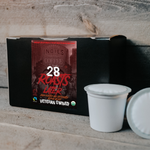
Single-serve drinkers should care too. Fresh coffee in K-Cups or pods still matters because the quality of the roast going into the pod affects what ends up in the cup. Packaging helps preserve the coffee, but it cannot turn old coffee into lively coffee. The same goes for cold brew packs. Since cold brew relies on long steeping and lower extraction temperatures, starting with flavorful, recently roasted coffee makes a real difference in the final glass.
So yes, freshness matters across brew methods. It just doesn’t look exactly the same for each one.
If you want one simple rule, here it is: pay attention to roast date, not just best-by date.
A best-by date tells you how long a product can sit and still be sold. A roast date tells you when the flavor clock actually started. Those are not the same thing. Coffee can technically remain drinkable for a long time, especially if sealed, but drinkable is a low bar. If you care about taste, freshness starts with knowing when the beans were roasted.
That is where smaller specialty roasters usually have the advantage over corporate coffee. They tend to roast in tighter batches, move product faster, and put actual dates on the bag because freshness is part of the promise, not an afterthought.
Even great coffee loses ground if you store it badly. Heat, light, moisture, and air are the enemies. Keep your beans in a sealed, opaque container in a cool, dry place. Don’t leave them open on the counter. Don’t store them above the stove. And despite all the old advice floating around, the fridge is usually a bad move because moisture and odors are not your friends.
Freezing can work if you are storing unopened coffee for longer periods, but for daily use, a well-sealed bag or container is usually enough. The point is simple: proper storage slows staling. It does not reverse it.
If a coffee was already old when you bought it, no magic canister is going to turn it into a fresh roast experience.
For whole bean coffee, many drinkers will get the best results somewhere in the first few weeks after roasting. A common practical window is about 5 to 30 days off roast, depending on the coffee and brew method. After that, the drop-off becomes more noticeable, though some coffees hold up better than others.
Dark roasts can feel like they fade faster because the roast process pushes more oils to the surface and can make oxidation more noticeable. Lighter roasts sometimes stay interesting longer, but they still benefit from being fresh. Ground coffee loses quality even faster because more surface area is exposed to air. If you want the strongest argument for whole bean over pre-ground, freshness is it.
That’s also why direct-to-consumer coffee has become such a strong alternative for people who are done settling for shelf coffee. When beans go from roaster to your kitchen without a long corporate obstacle course in the middle, the odds of getting that ideal freshness window go way up.
If you load your coffee with flavored creamer and sweetener, freshness may not be the first thing you notice. But if you drink coffee black, use quality water, or care at all about tasting what is actually in the cup, fresh roast becomes obvious fast.
It matters even more if you are buying premium coffee. Paying for specialty beans and then drinking them months after roast is like buying good steak and leaving it under a heat lamp. You can still eat it, sure. But you missed the point.
That does not mean every bag has to be treated like a tactical operation. It just means freshness should be one of your first filters when buying coffee, right alongside roast level, tasting preference, and brew style.
Yes - when the beans are good, the roast is skilled, and the coffee has had just enough time to rest. Freshly roasted coffee usually gives you more aroma, more flavor definition, and a cup that tastes like it still has a pulse. Old coffee can still be convenient, but convenient and exceptional are not the same thing.
That’s the bigger divide in coffee right now. On one side, you’ve got mass-produced bags built to survive long timelines. On the other, you’ve got coffee roasted with flavor in mind and delivered while it still has something to say. Indies Coffee was built for drinkers who know the difference and refuse to salute stale coffee just because it’s easy to find.
If your cup has been tasting flat lately, don’t overthink your grinder, your kettle, or your morning routine. Start with the roast date. Fresh coffee won’t fix everything, but it gives the bean a fighting chance to taste the way it was meant to.
You can smell the difference before you even take a sip. Open a bag of coffee roasted days ago and the aroma hits with purpose - chocolate, citrus, nuts, smoke, fruit, whatever that bean was built to deliver. Open a bag that has been sitting around for months, and you get something flatter, duller, and a lot closer to cardboard than character. So, is freshly roasted coffee better? Most of the time, yes. But the real answer is more interesting than the marketing slogan.
If your goal is a cup with more aroma, clearer flavor notes, and a finish that actually tastes alive, fresh roast matters. Coffee is an agricultural product, not shelf-stable brown dust that stays the same forever. Once coffee is roasted, it starts changing. Gases escape, aromatic compounds fade, and oxygen begins doing what oxygen does best - stripping away the good stuff.
That is why coffee roasted recently usually tastes more vivid than coffee that has been sitting in a warehouse, on a truck, and then under fluorescent lights at a grocery store. Freshly roasted beans preserve more of what the roaster worked to bring out. A light roast may show more brightness and fruit. A medium roast may hold onto sweetness and balance. A dark roast may hit with deeper cocoa, smoke, and body instead of tasting ashy and tired.
Freshness does not create quality out of thin air. Bad beans roasted yesterday are still bad beans. But if the coffee is high quality to begin with, freshness gives it a much better shot at tasting the way it should.
Here’s where people get tripped up. Freshly roasted coffee is better, but coffee can also be too fresh to brew at its best.
Right after roasting, beans release a lot of carbon dioxide. That process is called degassing. If you brew the coffee too soon, especially for pour over or espresso, that trapped gas can interfere with extraction. The water has a harder time saturating the grounds evenly, and the cup can taste sharp, uneven, or strangely hollow.
For many coffees, the sweet spot starts a few days after roast. Some beans open up beautifully around days 4 to 10. Espresso often benefits from a little more rest, sometimes a week or two, because gas has a bigger impact under pressure. That means the best coffee is not necessarily roasted this morning. It is roasted recently enough to be vibrant, but rested enough to brew right.
That trade-off matters. Anyone shouting that coffee must be brewed immediately after roasting is selling theater, not accuracy.
Coffee stales because the compounds that create flavor and aroma are volatile. They do not hang around forever. As roasted coffee sits, oxygen chips away at sweetness and complexity. Oils oxidize. Aromatics fade. What remains can still taste like coffee, but not like great coffee.
This is one reason mass-market coffee often leans so hard on roast level instead of flavor clarity. If beans have been sitting around long enough, subtle notes disappear. What survives is bitterness, roastiness, and a generic coffee taste that asks more from cream and sugar than the bean itself.
Fresh coffee gives you more range. You can actually taste the difference between origins, roast profiles, and blends. That matters whether you like a bright breakfast cup, a heavy French roast, or a no-nonsense dark coffee that punches through milk without falling apart.
Mostly, yes - but the timing window changes depending on how you brew.
For drip coffee and pour over, recently roasted beans usually give you more aroma and a cleaner, more defined cup. For French press, freshness helps preserve body and sweetness, though a slightly longer rest can smooth things out. For espresso, coffee that is too fresh can be frustrating. Shots can run unevenly, bloom aggressively, and produce inconsistent results until the beans settle.
Single-serve drinkers should care too. Fresh coffee in K-Cups or pods still matters because the quality of the roast going into the pod affects what ends up in the cup. Packaging helps preserve the coffee, but it cannot turn old coffee into lively coffee. The same goes for cold brew packs. Since cold brew relies on long steeping and lower extraction temperatures, starting with flavorful, recently roasted coffee makes a real difference in the final glass.
So yes, freshness matters across brew methods. It just doesn’t look exactly the same for each one.
If you want one simple rule, here it is: pay attention to roast date, not just best-by date.
A best-by date tells you how long a product can sit and still be sold. A roast date tells you when the flavor clock actually started. Those are not the same thing. Coffee can technically remain drinkable for a long time, especially if sealed, but drinkable is a low bar. If you care about taste, freshness starts with knowing when the beans were roasted.
That is where smaller specialty roasters usually have the advantage over corporate coffee. They tend to roast in tighter batches, move product faster, and put actual dates on the bag because freshness is part of the promise, not an afterthought.
Even great coffee loses ground if you store it badly. Heat, light, moisture, and air are the enemies. Keep your beans in a sealed, opaque container in a cool, dry place. Don’t leave them open on the counter. Don’t store them above the stove. And despite all the old advice floating around, the fridge is usually a bad move because moisture and odors are not your friends.
Freezing can work if you are storing unopened coffee for longer periods, but for daily use, a well-sealed bag or container is usually enough. The point is simple: proper storage slows staling. It does not reverse it.
If a coffee was already old when you bought it, no magic canister is going to turn it into a fresh roast experience.
For whole bean coffee, many drinkers will get the best results somewhere in the first few weeks after roasting. A common practical window is about 5 to 30 days off roast, depending on the coffee and brew method. After that, the drop-off becomes more noticeable, though some coffees hold up better than others.
Dark roasts can feel like they fade faster because the roast process pushes more oils to the surface and can make oxidation more noticeable. Lighter roasts sometimes stay interesting longer, but they still benefit from being fresh. Ground coffee loses quality even faster because more surface area is exposed to air. If you want the strongest argument for whole bean over pre-ground, freshness is it.
That’s also why direct-to-consumer coffee has become such a strong alternative for people who are done settling for shelf coffee. When beans go from roaster to your kitchen without a long corporate obstacle course in the middle, the odds of getting that ideal freshness window go way up.
If you load your coffee with flavored creamer and sweetener, freshness may not be the first thing you notice. But if you drink coffee black, use quality water, or care at all about tasting what is actually in the cup, fresh roast becomes obvious fast.
It matters even more if you are buying premium coffee. Paying for specialty beans and then drinking them months after roast is like buying good steak and leaving it under a heat lamp. You can still eat it, sure. But you missed the point.
That does not mean every bag has to be treated like a tactical operation. It just means freshness should be one of your first filters when buying coffee, right alongside roast level, tasting preference, and brew style.
Yes - when the beans are good, the roast is skilled, and the coffee has had just enough time to rest. Freshly roasted coffee usually gives you more aroma, more flavor definition, and a cup that tastes like it still has a pulse. Old coffee can still be convenient, but convenient and exceptional are not the same thing.
That’s the bigger divide in coffee right now. On one side, you’ve got mass-produced bags built to survive long timelines. On the other, you’ve got coffee roasted with flavor in mind and delivered while it still has something to say. Indies Coffee was built for drinkers who know the difference and refuse to salute stale coffee just because it’s easy to find.
If your cup has been tasting flat lately, don’t overthink your grinder, your kettle, or your morning routine. Start with the roast date. Fresh coffee won’t fix everything, but it gives the bean a fighting chance to taste the way it was meant to.