
0 item(s)
View cart
You have no items in your shopping cart.
If your first cup feels like a suggestion instead of a wake-up call, the problem usually is not coffee itself. It is the coffee you picked. A high caffeine coffee blend should do more than slap you awake. It should deliver real energy, real flavor, and none of that burnt, stale, corporate-coffee baggage people somehow learned to tolerate.
That is where the conversation gets more interesting. A lot of shoppers assume high caffeine means harsh taste, cheap beans, or caffeine loaded in as a gimmick. Sometimes that is true. But not always. The best high caffeine coffees are built with intention - from bean selection to roast profile to how fresh the bag is when it lands on your counter.
Caffeine levels are not random. They start with the bean itself. Some coffee species naturally carry more caffeine than others, and some blends are built specifically to push that number higher without turning the cup into a punishment.
Bean choice matters first. Robusta is known for having significantly more caffeine than Arabica. Arabica usually gets the spotlight for nuance and sweetness, but robusta brings more punch. That is why many high caffeine blends use some version of robusta in the mix. The trade-off is flavor. Poor-quality robusta can taste rough, rubbery, or overly bitter. Better robusta, used carefully, can add body, crema, and intensity without wrecking the cup.
Roast level also affects perception, though not always the way people think. Dark roast does not automatically mean more caffeine. If you measure by scoop, lighter roasts can actually edge higher because the beans are denser. If you measure by weight, the difference gets much smaller. So if a bag is marketed as bold and dark, that tells you more about flavor direction than caffeine strength.
Then there is blending strategy. A serious high caffeine coffee blend is not just random beans thrown together with a loud label. It balances bean type, roast profile, and extraction potential. Done right, you get a cup that feels powerful but still tastes like coffee instead of a chemistry experiment.
Plenty of brands talk tough. Fewer back it up in the cup.
The most common miss is using caffeine as a cover for low quality. If the beans are old, over-roasted, or sourced for cost alone, extra strength will not save them. It just gives you a bitter cup with a bigger jolt. That may work once on a sleep-deprived Monday, but it is not the kind of coffee you want to come back to every morning.
Another problem is stale inventory. Freshly roasted coffee behaves differently. It smells better, tastes cleaner, and keeps the blend from flattening into cardboard and smoke. When a coffee is marketed as high energy but sits too long in warehouses, you lose the very thing that makes a premium bag worth buying.
There is also a branding issue. Big coffee companies love the language of intensity because it sells. But intensity is not the same as quality. A high-caffeine label can mean a genuinely well-built blend, or it can mean somebody printed aggressive words on a bag and hoped nobody asked questions.
That is why smart buyers look past the chest-thumping. They want freshness, roast date confidence, flavor clarity, and a blend designed for people who actually drink coffee because they love it - not just because they need to survive a meeting.
The right blend depends on what kind of drinker you are. If you want maximum force and do not care much about subtle tasting notes, a blend with robusta and a darker profile may be exactly your speed. You will get a stronger edge, heavier body, and that punch-you-forward kind of cup.
If you still care about flavor and want more than raw power, look for a blend that aims for balance. That usually means careful sourcing, a roast profile that preserves character, and enough caffeine to matter without flattening everything into bitterness. A good high caffeine coffee blend should taste bold, not crude.
Brewing method matters too. If you use a drip machine every morning, you want consistency and a grind or whole bean option that works reliably without babysitting. If you are a French press or pour-over person, you may want a blend with more flavor separation and a cleaner finish. Espresso drinkers often want intensity with body, while cold brew fans usually prefer a coffee that stays smooth even when brewed long and strong.
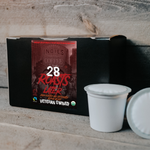
Convenience counts, and there is no shame in that. If your mornings run hard and fast, high-caffeine K-Cups or cold brew packs can make a lot of sense. The point is not to impress coffee snobs. The point is to get a strong, fresh cup in a format you will actually use.
A lot of people shop for stronger coffee like taste is a secondary issue. That is a mistake.
If you drink coffee every day, flavor is not a bonus. It is the whole game. The best high caffeine blends still give you a satisfying cup with depth, not just brute force. You might notice dark chocolate, toasted nuts, smoke, spice, or a deep earthy backbone depending on the blend. You should not have to choke it down just because the caffeine number looks impressive.
That is where roast freshness and bean quality separate specialty-minded brands from commodity sellers. When coffee is fresh, the strong notes feel intentional. When it is stale, everything collapses into one-note bitterness. Same idea with sourcing. Better beans can handle a bold profile without turning muddy.
This is especially important for people moving up from grocery-store coffee. If you are used to mass-market dark roast, you may think harshness equals strength. It does not. Often it just means the coffee was roasted to cover flaws. A well-made high caffeine coffee blend can hit harder and taste cleaner at the same time.
Here is the truth: freshness is not a luxury detail. It is one of the biggest reasons your coffee either tastes alive or tastes dead.
Coffee starts losing its edge after roasting. That does not mean it instantly goes bad, but the clock is real. The longer it sits, the flatter the cup gets. For a stronger blend, that matters even more because bold profiles can go stale in ugly ways. You lose sweetness first, then aroma, then the little details that keep the coffee from tasting blunt and tired.
That is why independent coffee brands have an opening the giant players cannot fake. Smaller-batch roasting, faster fulfillment, and actual attention to what ends up in your mug make a difference you can taste. You are not grabbing a bag that has been bouncing around a supply chain forever. You are getting coffee that still has a pulse.
For buyers who care about both performance and principle, that matters. Choosing a fresh, high-caffeine blend from an independent brand is not just about avoiding weak coffee. It is also about refusing to settle for the mass-produced middle.
Not everybody needs one. If you drink coffee mostly for ritual, prefer mild cups, or are sensitive to caffeine, a standard blend may serve you better. More caffeine is not automatically better. It is better when it fits your routine.
But if your mornings start early, your workload is real, and your coffee needs to pull its weight, a stronger blend makes sense. It is especially useful for daily drinkers who want one cup that actually gets the job done, for cold brew fans who like a serious kick, and for people replacing sugary energy drinks with something cleaner and more grounded.
It also fits buyers who are tired of bland coffee with macho packaging. They want a bag that delivers what it promises. Strong means strong. Fresh means fresh. Flavor still matters.
That expectation is reasonable. You are paying for more than caffeine. You are paying for a better experience, a better habit, and a coffee choice that does not feel generic.
These are not always the same thing.
A regular strong coffee might taste intense because of roast level or brew method. It can be dark, smoky, and full-bodied without actually containing much more caffeine than average. A true high caffeine coffee blend is designed to push caffeine upward on purpose, usually through bean selection and blend construction.
That distinction matters if your goal is performance. If you just want a bolder taste, many dark roasts will get you there. If you want a measurable increase in kick, you need a blend built for it.
The sweet spot is finding one that does both. That is the standard more coffee drinkers should demand.
A good cup should wake you up without making flavor the casualty. It should feel deliberate, not overhyped. And if you are going to bring a high caffeine coffee blend into your daily rotation, pick one that respects the bean, respects your routine, and does not taste like it came off a boardroom assembly line. Coffee should have a backbone. So should the brand behind it.
If your first cup feels like a suggestion instead of a wake-up call, the problem usually is not coffee itself. It is the coffee you picked. A high caffeine coffee blend should do more than slap you awake. It should deliver real energy, real flavor, and none of that burnt, stale, corporate-coffee baggage people somehow learned to tolerate.
That is where the conversation gets more interesting. A lot of shoppers assume high caffeine means harsh taste, cheap beans, or caffeine loaded in as a gimmick. Sometimes that is true. But not always. The best high caffeine coffees are built with intention - from bean selection to roast profile to how fresh the bag is when it lands on your counter.
Caffeine levels are not random. They start with the bean itself. Some coffee species naturally carry more caffeine than others, and some blends are built specifically to push that number higher without turning the cup into a punishment.
Bean choice matters first. Robusta is known for having significantly more caffeine than Arabica. Arabica usually gets the spotlight for nuance and sweetness, but robusta brings more punch. That is why many high caffeine blends use some version of robusta in the mix. The trade-off is flavor. Poor-quality robusta can taste rough, rubbery, or overly bitter. Better robusta, used carefully, can add body, crema, and intensity without wrecking the cup.
Roast level also affects perception, though not always the way people think. Dark roast does not automatically mean more caffeine. If you measure by scoop, lighter roasts can actually edge higher because the beans are denser. If you measure by weight, the difference gets much smaller. So if a bag is marketed as bold and dark, that tells you more about flavor direction than caffeine strength.
Then there is blending strategy. A serious high caffeine coffee blend is not just random beans thrown together with a loud label. It balances bean type, roast profile, and extraction potential. Done right, you get a cup that feels powerful but still tastes like coffee instead of a chemistry experiment.
Plenty of brands talk tough. Fewer back it up in the cup.
The most common miss is using caffeine as a cover for low quality. If the beans are old, over-roasted, or sourced for cost alone, extra strength will not save them. It just gives you a bitter cup with a bigger jolt. That may work once on a sleep-deprived Monday, but it is not the kind of coffee you want to come back to every morning.
Another problem is stale inventory. Freshly roasted coffee behaves differently. It smells better, tastes cleaner, and keeps the blend from flattening into cardboard and smoke. When a coffee is marketed as high energy but sits too long in warehouses, you lose the very thing that makes a premium bag worth buying.
There is also a branding issue. Big coffee companies love the language of intensity because it sells. But intensity is not the same as quality. A high-caffeine label can mean a genuinely well-built blend, or it can mean somebody printed aggressive words on a bag and hoped nobody asked questions.
That is why smart buyers look past the chest-thumping. They want freshness, roast date confidence, flavor clarity, and a blend designed for people who actually drink coffee because they love it - not just because they need to survive a meeting.
The right blend depends on what kind of drinker you are. If you want maximum force and do not care much about subtle tasting notes, a blend with robusta and a darker profile may be exactly your speed. You will get a stronger edge, heavier body, and that punch-you-forward kind of cup.
If you still care about flavor and want more than raw power, look for a blend that aims for balance. That usually means careful sourcing, a roast profile that preserves character, and enough caffeine to matter without flattening everything into bitterness. A good high caffeine coffee blend should taste bold, not crude.
Brewing method matters too. If you use a drip machine every morning, you want consistency and a grind or whole bean option that works reliably without babysitting. If you are a French press or pour-over person, you may want a blend with more flavor separation and a cleaner finish. Espresso drinkers often want intensity with body, while cold brew fans usually prefer a coffee that stays smooth even when brewed long and strong.
Convenience counts, and there is no shame in that. If your mornings run hard and fast, high-caffeine K-Cups or cold brew packs can make a lot of sense. The point is not to impress coffee snobs. The point is to get a strong, fresh cup in a format you will actually use.
A lot of people shop for stronger coffee like taste is a secondary issue. That is a mistake.
If you drink coffee every day, flavor is not a bonus. It is the whole game. The best high caffeine blends still give you a satisfying cup with depth, not just brute force. You might notice dark chocolate, toasted nuts, smoke, spice, or a deep earthy backbone depending on the blend. You should not have to choke it down just because the caffeine number looks impressive.
That is where roast freshness and bean quality separate specialty-minded brands from commodity sellers. When coffee is fresh, the strong notes feel intentional. When it is stale, everything collapses into one-note bitterness. Same idea with sourcing. Better beans can handle a bold profile without turning muddy.
This is especially important for people moving up from grocery-store coffee. If you are used to mass-market dark roast, you may think harshness equals strength. It does not. Often it just means the coffee was roasted to cover flaws. A well-made high caffeine coffee blend can hit harder and taste cleaner at the same time.
Here is the truth: freshness is not a luxury detail. It is one of the biggest reasons your coffee either tastes alive or tastes dead.
Coffee starts losing its edge after roasting. That does not mean it instantly goes bad, but the clock is real. The longer it sits, the flatter the cup gets. For a stronger blend, that matters even more because bold profiles can go stale in ugly ways. You lose sweetness first, then aroma, then the little details that keep the coffee from tasting blunt and tired.
That is why independent coffee brands have an opening the giant players cannot fake. Smaller-batch roasting, faster fulfillment, and actual attention to what ends up in your mug make a difference you can taste. You are not grabbing a bag that has been bouncing around a supply chain forever. You are getting coffee that still has a pulse.
For buyers who care about both performance and principle, that matters. Choosing a fresh, high-caffeine blend from an independent brand is not just about avoiding weak coffee. It is also about refusing to settle for the mass-produced middle.
Not everybody needs one. If you drink coffee mostly for ritual, prefer mild cups, or are sensitive to caffeine, a standard blend may serve you better. More caffeine is not automatically better. It is better when it fits your routine.
But if your mornings start early, your workload is real, and your coffee needs to pull its weight, a stronger blend makes sense. It is especially useful for daily drinkers who want one cup that actually gets the job done, for cold brew fans who like a serious kick, and for people replacing sugary energy drinks with something cleaner and more grounded.
It also fits buyers who are tired of bland coffee with macho packaging. They want a bag that delivers what it promises. Strong means strong. Fresh means fresh. Flavor still matters.
That expectation is reasonable. You are paying for more than caffeine. You are paying for a better experience, a better habit, and a coffee choice that does not feel generic.
These are not always the same thing.
A regular strong coffee might taste intense because of roast level or brew method. It can be dark, smoky, and full-bodied without actually containing much more caffeine than average. A true high caffeine coffee blend is designed to push caffeine upward on purpose, usually through bean selection and blend construction.
That distinction matters if your goal is performance. If you just want a bolder taste, many dark roasts will get you there. If you want a measurable increase in kick, you need a blend built for it.
The sweet spot is finding one that does both. That is the standard more coffee drinkers should demand.
A good cup should wake you up without making flavor the casualty. It should feel deliberate, not overhyped. And if you are going to bring a high caffeine coffee blend into your daily rotation, pick one that respects the bean, respects your routine, and does not taste like it came off a boardroom assembly line. Coffee should have a backbone. So should the brand behind it.